Seller Articles

We’ve had this conversation more times than we can count: an owner is finally ready to sell, but the business they’re bringing to market is no longer the business buyers would have paid a premium for three years earlier. The business has been good to them. They’ve built something real. But when we dig into the financials, the picture is softer than it used to be. Revenue has plateaued. A couple of key people have left....

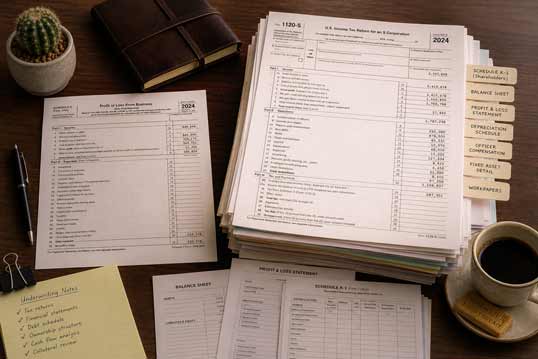
If you've worked with a good CPA for years, you trust them and for good reason. They know your business, have kept you out of trouble with the IRS, and have probably saved you real money along the way. But there's one question your CPA rarely asks, and that is: What happens when you want to sell? It’s simply not their job to ask that question. That's where a business broker's perspective deviates from your accountant’s and...

Ask a business owner what their company sold for and they'll give you one number. Ask them what they actually walked away with — after debt payoff, taxes, the working capital adjustment, and the seller note that's still being paid down — and you'll get a very different answer, usually accompanied by a story. Here's the uncomfortable truth from the intermediary's side of the table: two offers with the same headline price can differ by hundreds...

When a business changes hands, the lease attached to it can be just as important as the business itself. This is especially true for restaurants, retail stores, salons, and other companies that rely heavily on location and customer traffic. A strong location can add value to a business. However, the downside of the equation is that a problematic lease can create unexpected headaches for both buyers and sellers. For anyone considering the purchase of a business,...

One of the first questions sellers ask us is some version of: “How many buyers do you already have for a business like mine?” The question is totally reasonable. If you’re selling a plumbing company in Albuquerque, you assume we should already know every competitor, every strategic buyer, every private equity group rolling up businesses in your market. Sometimes we do, but just as often we don’t. Of all the things that a business broker brings to...

Family-owned businesses continue to play an outsized role in the New Mexico economy, where most businesses are small and owner-operated. Yet despite how common these businesses are, succession planning remains one of the least addressed challenges facing owners approaching retirement or transition. Many owners assume that selling to a child or other relative will be simpler than selling to an outside buyer. In reality, family transitions often introduce a different set of operational, financial, and emotional...

Many sellers are surprised to discover how much influence a buyer's lender has over the sale process. Even when a buyer is motivated and the business looks strong, financing isn't a formality; it's an ongoing evaluation that can shape price, structure, timing, and even who can realistically buy the business. A "Yes" Is Conditional Until Closing A bank's approval doesn't arrive once and stay put. A loan moves through several sets of hands, and each stage brings...

Most New Mexico small business owners often focus on the day-to-day operations, with an eye toward growing the business. They spend little time preparing to exit their business, often because it’s such a far-off possibility as to seem impractical. While it may sound counterintuitive, exit planning needs to be part of your growth strategy from Day One. It’s not only for large businesses. Without a plan, owners often drift toward burnout – and burnout erodes your...

Selling a business is rarely derailed by poor negotiating tactics. More often, it comes down to preparation, flexibility, and a realistic understanding of what the other side is up against. That last part is harder than it sounds. Most sellers have spent years building something, and the number in their head reflects that history. A buyer sees a set of financial statements and a risk they're being asked to take on with their own capital and...

Most people envision selling a small business as a straightforward transaction: a purchase price is agreed upon, the deal closes, and the seller walks away with the proceeds. In many cases, that's exactly how it works. But not every deal fits that model, particularly when parties agree on the value of the business as it has performed historically but differ on what comes next. When that gap exists, a holdback is one tool that can help. Rather...

Selling a business isn’t like selling a house. There’s no open house, no bidding wars, and no public listings on multiple websites. More importantly, there’s no guarantee that the highest offer produces the best outcome. The wrong buyer, even at the right price, can create downstream regrets. The real challenge isn’t finding a buyer. It’s understanding how each type of buyer actually changes the dynamics of a deal. The Competitor: Speed, Familiarity, and Real Risk Attached Selling to...

For decades, owning a professional practice followed a fairly rigid sequence. Newly licensed doctors, dentists, veterinarians, chiropractors, and optometrists joined as associates. After years of building clinical experience, savings, and local reputation, a smaller subset eventually considered buying a practice of their own. Ownership came later, often much later, largely driven by financial considerations. Large down payments, conservative underwriting, and the complexity of SBA-backed loans effectively pushed ownership into mid-career. Many capable doctors never crossed that...

For much of the last decade, the idea of a “Grey Tsunami” dominated coverage of small business ownership. As Baby Boomers, now about aged 62 to 80, retired en masse, we were told to expect an eye-watering handoff of wealth and assets to younger generations. Its effects would be felt across finance, real estate, and small business ownership. After all, Boomers own just over half of U.S. small businesses, according to Census data. The implication was...

When buyers begin exploring opportunities in New Mexico, they’re not only evaluating financials and systems; they’re imagining what it would feel like to step into a business rooted in a place with its own rhythm. Whether they’re moving here from Denver or Dallas or already living in Santa Fe, Albuquerque, or Las Cruces, they want something that feels both stable and has the potential for them to put their own stamp on. The businesses that rise...

Selling a small business is a significant milestone. It not only involves financial decisions, legal steps, and lender requirements, but it also introduces a set of emotions that can influence how the process unfolds. While every seller is different, certain patterns appear often enough that they're worth talking about. It is natural for a seller’s emotions to progress from early optimism, to fatigue during the heightened scrutiny of due diligence, to impatience as delays and follow-up...